A reliable capsule is the result of controlled powder behaviour, a suitable shell, verified filling, protected packaging and records that prove each decision. By the end, you will know how to assess a production flow, qualify a formulation, compare gelatin with HPMC, and request evidence before approving a contract manufacturer.
Key takeaways
- Verify API identity, lot number and quantity against the master formula.
- Choose shell material and release design from formulation and delivery requirements.
- Request assay, dissolution, uniformity and microbiological test results for each batch.
- Check packaging studies, stability data, licences and batch documentation before appointing a manufacturer.
How does a capsule move from raw material to packed batch?
A capsule becomes a releasable batch through controlled hand-offs, not filling alone. API dispensing and excipient dispensing use approved materials; operators verify identity, lot number and quantity against the master formula. Sifting removes agglomerates and foreign matter.
The blending process for capsules usually involves a tumble blender to ensure uniform distribution of the active ingredient throughout the excipients. Monitor blending time and speed: over-mixing can cause segregation or change powder properties, while electrostatic charging disrupts flow. Control magnesium stearate carefully because excess lubricant can slow dissolution.
After blending, transfer the powder to the encapsulation machine for hard gelatin or HPMC capsules. Define the capsule size, target fill weight, machine speed and tamping or dosator setting, then confirm weight and content uniformity during the run. Scale-up evidence matters because powder behaviour can change with speed and batch size.
| Stage | Control | Record |
|---|---|---|
| Dispensing and blending | Identity, quantity, sift integrity, blend uniformity, temperature and humidity | Material records, master batch record and blend checks |
| Encapsulation and cleaning | Validated settings, in-process weights, shell compatibility and cleaned equipment | Equipment settings, cleaning record and deviation investigation |
| Inspection and packing | Dedusting, detector challenge, visual inspection and line clearance | Separate metal-detector challenge and visual-inspection records |
Inspect for split or cracked shells, pinholes, dents, telescoping, poor locking, cap-body separation and powder leakage. Remove previous-batch remnants before issuing printed foil or cartons. Reconcile bulk capsules, rejects, printed materials and finished packs, using barcode or vision verification where justified. Pack in blisters or bottles suited to moisture and oxygen sensitivity.
A certificate of analysis cannot replace manufacturing evidence, equipment settings, in-process checks or documented deviations; quality assurance reviews the complete record before release.
Which shell and release design suits the formulation?
Choose hard gelatin capsules when the formulation and storage evidence support gelatin’s moisture range and the vegetarian requirement does not apply. Gelatin becomes brittle and cracks when overdried, but softens, deforms and handles poorly when too wet.
HPMC capsules are often preferred for hygroscopic formulations and vegetarian capsules because they contain less moisture and respond less to humidity. Hygroscopic powders in capsules are materials that readily absorb moisture from the surrounding environment. Define shell moisture limits using supplier data and stability results, not a generic room-condition claim.
Control humidity and assess oxygen exposure for oxidation-sensitive APIs; the shell and packaging system must provide adequate protection.
| Shell or release design | What to assess | Suitable use |
|---|---|---|
| Hard gelatin capsules | Lower cost option, but moisture-sensitive; inspect brittleness, softening and machine handling | Compatible, stable powder fills without vegetarian positioning |
| HPMC capsules | Vegetarian positioning, lower shell moisture and lower humidity sensitivity; confirm API-shell compatibility | Hygroscopic or oxidation-sensitive formulations when stability supports the choice |
| Modified-release fill | Polymer-coated pellets, coated granules or another multiparticulate system; confirm dissolution profile and dose-dumping control | Sustained release, not a simple immediate-release powder fill |
Qualify the formulation by measuring powder flow, bulk and tapped density, moisture, particle-size distribution, segregation and electrostatic behaviour, then test API-shell compatibility. Sizes 00, 0, 1, 2, 3, 4 and 5 offer a selection range, not universal capacity.
Require the validated fill-weight range and target weight variation for the chosen size; these affect dose uniformity, machine speed and swallowing. Fill-weight uniformity alone cannot prove active-content uniformity when API is a small blend fraction. Immediate-release capsules need rapid disintegration and dissolution; modified-release capsules need dissolution testing that demonstrates the intended profile.
Which tests prove that each capsule meets its specification?
A capsule meets its specification only when process checks and finished-product tests agree. The generic specification should cover assay, identification, related substances, dissolution, uniformity of dosage units, microbial quality where applicable, capsule-shell attributes and fill-weight controls.
| Test | What it proves | Record |
|---|---|---|
| Shell inspection and lock-length check | No cracks, pinholes, dents or cap-body separation; correct mechanical closure | In-process inspection worksheet |
| Fill-weight variation and content uniformity | Weight control and consistent active-ingredient distribution | Weight chart and laboratory report |
| Disintegration, dissolution, leakage and metal detection | Breakup, drug-release performance, powder containment and detector sensitivity | Finished-product report, leakage record and challenge log |
Content uniformity in capsules versus weight variation can be a critical distinction. Fill-weight variation does not guarantee uniform API distribution when the API is a small percentage of total fill weight. Content uniformity testing demonstrates that each capsule contains the correct amount.
Disintegration measures how quickly the shell and contents break apart; dissolution measures the rate and extent of drug release into a specified medium. Base methods and acceptance criteria on the applicable Indian Pharmacopoeia monograph or another recognised pharmacopoeial standard.
Check powder segregation during blending, transfer and filling. Control it through suitable particle-size distribution, controlled transfers and validated blending parameters. Validate leakage detection for powder escape during handling, transport and storage, and investigate failures.
Challenge the metal detector at defined intervals with certified test pieces. Record calibration, system suitability and method verification.
Incoming identity records and approved raw-material specifications support materials; the master formula and batch manufacturing record support quantities and settings. The certificate of analysis records release results, while OOS, deviation and CAPA records explain failures. Request trend reports for assay, dissolution, content uniformity, deviations and complaints, not only one batch certificate.
How should packaging and stability prove protection through shelf life?
Match the pack to the capsule’s exposure risks, not to a nominal foil or film name. Moisture protection for capsules often requires careful consideration of the packaging material and configuration.
1. Compare PVC blister packaging with a high-barrier aluminium-based blister pack or aluminium strip pack. High-barrier aluminium-based blister packs or aluminium strip packs can provide better protection against moisture and oxygen than standard PVC blisters, especially for hygroscopic or oxidation-sensitive formulations. Assess light protection and transport risks too.
2. Support the choice with moisture-permeation data, stability studies in the proposed commercial pack, seal-integrity or leak-test results, and transport-exposure assessment covering temperature and humidity excursions. The choice of packaging should be supported by stability studies conducted in the proposed commercial pack, along with moisture-permeation data and seal-integrity testing.
3. Build the stability protocol around the product, pack and proposed shelf life. India is generally considered to fall within ICH climatic Zone IVb: long-term studies are commonly conducted at 30°C ± 2°C/75% RH ± 5% RH, and accelerated studies at 40°C ± 2°C/75% RH ± 5% RH.
Align the exact conditions with applicable Indian requirements. Retain the protocol, test methods, pull-point schedule, chamber qualification records and stability reports.
4. Control gelatin shells because excessive drying causes brittleness and cracking, while excess moisture causes softening and deformation. Justify temperature and humidity limits with shell-supplier data and product results.
5. Keep approved specifications for foil, PVC, HPMC or gelatin shells, bottles, closures, desiccants and printed components. Record line clearance, printed-material issuance and return, barcode or vision checks, reconciliation, and seal tests.
6. Ensure the packaging batch record confirms artwork, batch number, manufacturing date, expiry date, storage condition and strength. Review labels against the Drugs and Cosmetics Rules, 1945 and Legal Metrology requirements where relevant.
What should you verify before appointing a capsule contract manufacturer?
1. Verify the site’s drug-manufacturing licence, approved dosage forms and specific product permission through the state licensing authority and CDSCO framework. Confirm whether your capsule is a drug or an FSSAI-regulated food or health supplement; “healthcare product” is not a regulatory category.
Check Schedule M, Indian Pharmacopoeia monographs and Drugs and Cosmetics Rules, 1945 label controls.
2. Make capsule manufacturer qualification evidence-led. Request a controlled technology-transfer package containing the master formula, approved specifications, analytical methods, process parameters, in-process controls, packaging configuration, cleaning requirements and deviation history.
The master formula defines composition, quantities, equipment, process steps, critical parameters, controls and packaging; the batch manufacturing record shows actual lots, operators, equipment, settings, yields, results, deviations and quality-assurance review.
Require the specification sheet, stability protocol, deviation records and change-control history, plus analytical-method validation or verification, calibration, OOS trends, data-integrity controls and retained reference and stability samples.
3. A certificate of analysis for capsules should include results for identification, assay, related substances, dissolution, uniformity of dosage units, microbial quality where applicable and specified capsule-shell attributes. It does not prove controlled manufacture, valid methods or reliable data.
Require process-performance or engineering batches showing commercial-scale fill-weight control, content uniformity and dissolution; repeating a small trial is inadequate transfer.
4. Audit HVAC, dust containment, validated cleaning, equipment dedication, line clearance and CAPA. Review health-based exposure limits for potent substances and supplier qualification for shells, inks, colourants and lubricants, including identity, impurities, microbial quality and compatibility.
Assess Monique Pharmaceuticals Pvt Ltd by this same evidence: licensed scope and controlled records must support your exact capsule, strength, release type and pack.
Related products
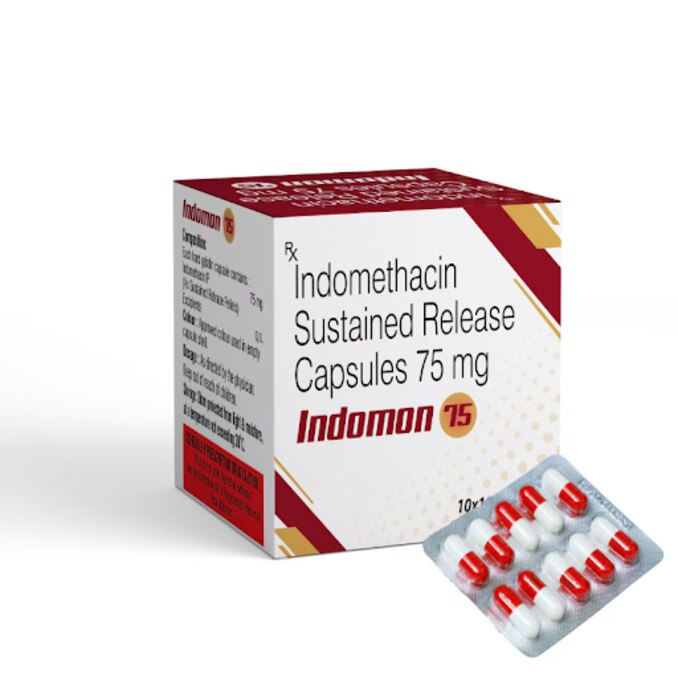
 | Pharmaceutical Medicines Indomethacin Sustained Release Capsules 75mg ₹150 Indomon-75 Capsule is effective in alleviating moderate pain and lowering fever. View product → |
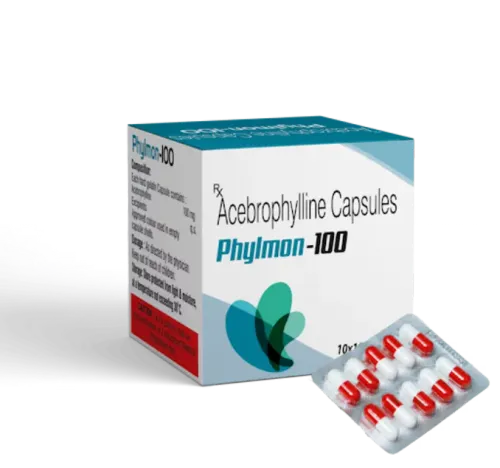
 | Pharmaceutical Medicines ₹82 Phylmon-100 Capsule is utilised for the treatment and prevention of symptoms associated with asthma, bronchitis, and chronic obstructive pulmonary... View product → |
Frequently asked questions
How does a capsule move from raw material to packed batch?
The process runs through approved material dispensing, identity and quantity checks, sifting, blending, capsule filling, in-process controls, inspection, testing and final packing.
Which shell and release design suits the formulation?
Select hard or soft shells, gelatin or vegetarian polymers, and immediate-, delayed- or extended-release designs according to the fill material, moisture sensitivity and intended drug release.
Which tests prove that each capsule meets its specification?
Review tests such as appearance, average weight, weight variation, identification, assay, content uniformity, dissolution, disintegration, moisture and microbiological quality where specified.
How should packaging and stability prove protection through shelf life?
Match the pack to moisture, oxygen, light and handling risks, then review stability data from the proposed container-closure system through the labelled shelf life.
What should you verify before appointing a capsule contract manufacturer?
Check the manufacturer’s applicable licence, quality system, master batch records, test capabilities, deviation and change-control process, stability evidence, audit access and batch-release documentation.
Related product
 | Pharmaceutical Medicines ₹30 Finasteride 5mg Tablet is used to treat hair loss in men. It is used to increase hair growth and prevent further hair loss with male pattern baldness... View product → |